

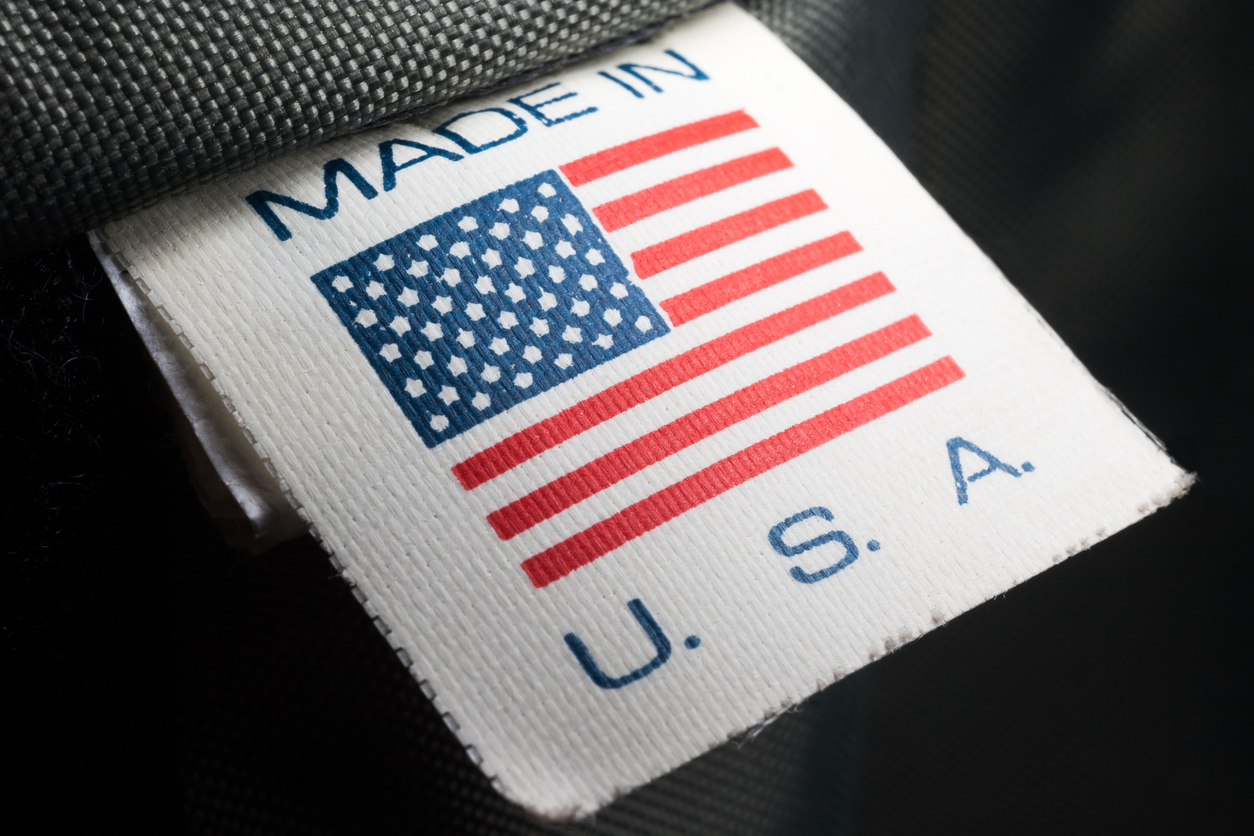
"Made in USA" is a powerful statement that significantly impacts consumer purchases. However, it is also one of the most visible and increasingly salient concerns regarding unsubstantiated business claims. Due to a White House Executive Order issued on March 13, 2026, "Made in America" claims are about to receive more attention than we have seen in years. If your business manufactures, fabricates, or sells products with foreign components, now is the time to audit your practices.
The "All or Virtually All" Standard
The Federal Trade Commission (“FTC”) has long enforced strict guidelines regarding domestic origin claims. The law is clear: only a product in which "all or virtually all" of it is produced in the U.S. can carry an "unlimited" Made in America claim. For products that do not meet this high bar, businesses must use limited claims to remain compliant. Examples of appropriate qualified claims include:
- Assembly: Assembled in America with American and foreign parts
- Design: Designed in America
- Component Specificity: Engine and Transmission made in America; chassis and body made with foreign parts but assembled in America
- Detailed Disclosures: Specifying foreign-made power units while noting other components are U.S.-made and assembled
New Responsibility for Online Sellers
The March 2026 Executive Order introduces a significant shift: it mandates that online sellers (and in some instances, "sellers" in general) take responsibility for verifying the "Made in America" claims of the products they list. While the Order itself does not create new private rights, it signals a period of vigorous enforcement. We anticipate an ongoing substantial impact characterized by:
- Increased FTC Oversight: New regulations and more aggressive enforcement actions
- State-Level Rigor: States like California have historically been more rigorous than the federal government and are likely to continue aggressive governmental and private enforcement
- Private Actions: A likely rise in aggressive private litigation arising from "unfair and deceptive practices"
Protecting Your Business
You don’t have to make an explicit written statement to get into trouble. The mere use of an American flag in a product photo or background can be interpreted as a claim of domestic origin.
At Kennyhertz Perry, we are a law firm staffed by several former general and in-house counsel with many years of experience advising clients on complex “Made in U.S.A.” issues. We understand how to resolve these matters in a way that is both cost-effective and protective of your brand’s reputation.
By Arthur Chaykin, Kennyhertz Perry, LLC
Arthur Chaykin is head of Kennyhertz Perry’s Intellectual Property practice. He was formerly a Vice-President of Law at the Sprint Corporation where he served as, in succession, their chief litigator, the head of the business law department, and Vice President of the first legal department at Sprint supporting marketing and sales in all areas of Sprint’s business: international, wireless, wireline, local and long-distance services. At Sprint, he also served as the head lawyer for Sprint Ethics and Compliance program. He has since served as General Counsel to a major manufacturer and distributor of automotive lifting equipment and automotive accessories and has represented numerous clients on trademark matters, copyright cases, trade secrets disputes, food safety regulatory issues, and consumer product safety issues. has over 35 years of legal experience handling trademark, patent, copyright, and trade secret litigation and arbitration.
To learn more about Kennyhertz Perry, LLC, please visit kennyhertzperry.com.
*The choice of a lawyer is an important decision and should not be based solely upon advertisements.