



We understand the challenges business owners face.
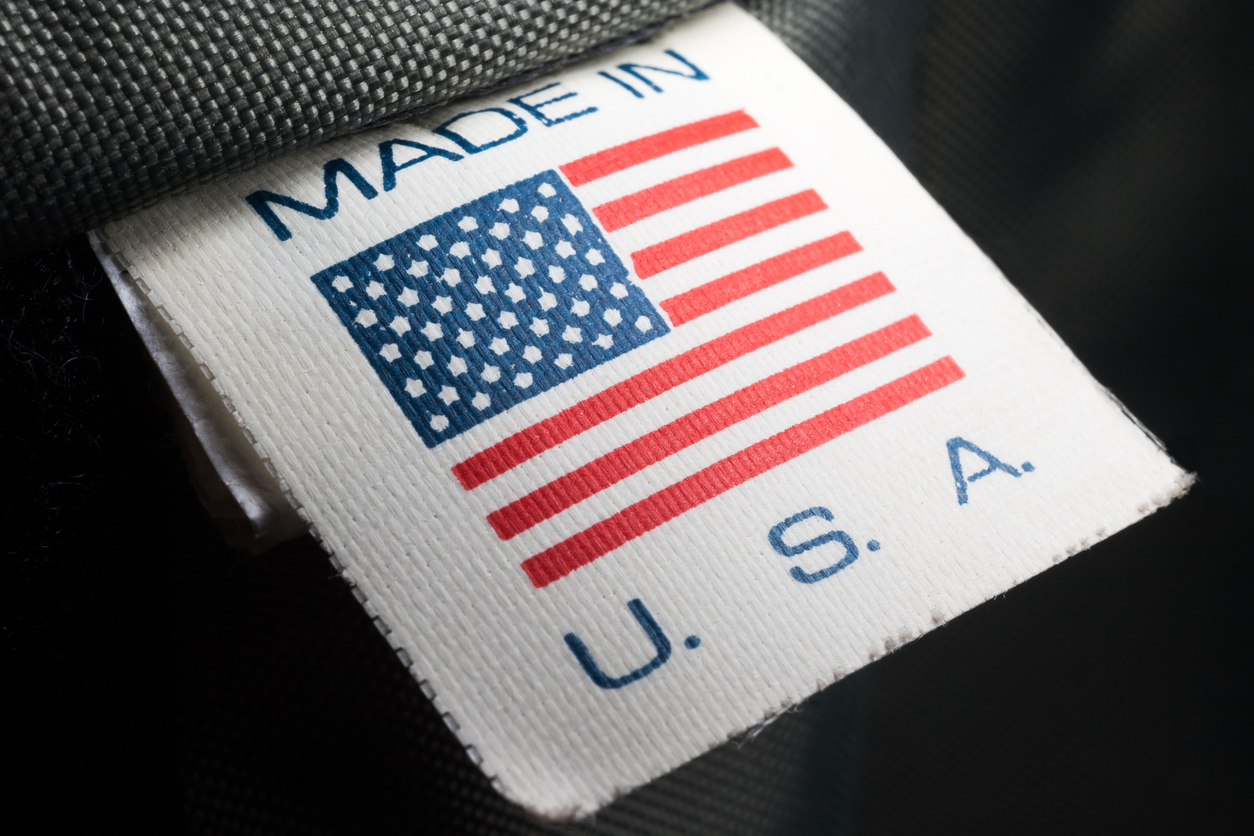
"Made in USA" is a powerful statement that significantly impacts consumer purchases. However, it is also one of the most visible and increasingly salient concerns regarding unsubstantiated business claims. Due to a White House Executive Order issued on March 13, 2026, "Made in America" claims are about to receive more attention than we have seen in years. If your business manufactures, fabricates, or sells products with foreign components, now is the time to audit your practices.
The "All or Virtually All" Standard
The Federal Trade Commission (“FTC”) has long enforced strict guidelines regarding domestic origin claims. The law is clear: only a product in which "all or virtually all" of it is produced in the U.S. can carry an "unlimited" Made in America claim. For products that do not meet this high bar, businesses must use limited claims to remain compliant. Examples of appropriate qualified claims include:
- Assembly: Assembled in America with American and foreign parts
- Design: Designed in America
- Component Specificity: Engine and Transmission made in America; chassis and body made with foreign parts but assembled in America
- Detailed Disclosures: Specifying foreign-made power units while noting other components are U.S.-made and assembled
New Responsibility for Online Sellers
The March 2026 Executive Order introduces a significant shift: it mandates that online sellers (and in some instances, "sellers" in general) take responsibility for verifying the "Made in America" claims of the products they list. While the Order itself does not create new private rights, it signals a period of vigorous enforcement. We anticipate an ongoing substantial impact characterized by:
- Increased FTC Oversight: New regulations and more aggressive enforcement actions
- State-Level Rigor: States like California have historically been more rigorous than the federal government and are likely to continue aggressive governmental and private enforcement
- Private Actions: A likely rise in aggressive private litigation arising from "unfair and deceptive practices"
Protecting Your Business
You don’t have to make an explicit written statement to get into trouble. The mere use of an American flag in a product photo or background can be interpreted as a claim of domestic origin.
At Kennyhertz Perry, we are a law firm staffed by several former general and in-house counsel with many years of experience advising clients on complex “Made in U.S.A.” issues. We understand how to resolve these matters in a way that is both cost-effective and protective of your brand’s reputation.
By Arthur Chaykin, Kennyhertz Perry, LLC
Arthur Chaykin is head of Kennyhertz Perry’s Intellectual Property practice. He was formerly a Vice-President of Law at the Sprint Corporation where he served as, in succession, their chief litigator, the head of the business law department, and Vice President of the first legal department at Sprint supporting marketing and sales in all areas of Sprint’s business: international, wireless, wireline, local and long-distance services. At Sprint, he also served as the head lawyer for Sprint Ethics and Compliance program. He has since served as General Counsel to a major manufacturer and distributor of automotive lifting equipment and automotive accessories and has represented numerous clients on trademark matters, copyright cases, trade secrets disputes, food safety regulatory issues, and consumer product safety issues. has over 35 years of legal experience handling trademark, patent, copyright, and trade secret litigation and arbitration.
To learn more about Kennyhertz Perry, LLC, please visit kennyhertzperry.com.
*The choice of a lawyer is an important decision and should not be based solely upon advertisements.
A provision slipped into the spending package signed into law to reopen the government effectively reverses a key part of the 2018 Farm Bill, which federally legalized hemp.
Key takeaways:
- The Reversal: The new language significantly narrows the federal definition of "hemp." It effectively bans most intoxicating hemp-derived cannabinoid products, including popular items containing Delta-8 THC, THCA flower, and certain synthetic cannabinoids.
- The Impact: This move is set to outlaw almost all consumable hemp products that have proliferated across the country since 2018, putting an estimated 300,000+ jobs and countless small businesses—from farmers to retailers—at risk.
- The Timeline: The new prohibition doesn't take effect immediately, providing a one-year grace period (until late 2026) before the tougher restrictions on hemp-derived THC products kick in. This window is a critical "lifeline" for the industry to mobilize for legislative or legal action.
You can review the full text of the legislation and its provisions here:
https://www.congress.gov/bill/119th-congress/house-bill/5371
This is a stark reminder of how quickly policy can change and the profound impact that those changes can have on entire industries.
This regulatory whiplash is great for lawyers like me, whose job it is to help businesses navigate the ever-changing regulatory landscape. It’s bad for everyone else.
By Jon Dedon, Kennyhertz Perry, LLC
About Kennyhertz Perry, LLC
Kennyhertz Perry, LLC is a business and litigation law firm representing clients in highly regulated industries. Our dedicated Artificial Intelligence practice group is focused on helping clients navigate the legal, regulatory, and ethical complexities of deploying artificial intelligence in highly regulated sectors such as finance, banking, and real estate. To learn more about the firm, visit kennyhertzperry.com.
*The choice of a lawyer is an important decision and should not be based solely upon advertisements.

OpenAI recently updated its Usage Policy to prohibit "provision of tailored advice that requires a license, such as legal or medical advice, without appropriate involvement by a licensed professional." (Source: OpenAI Usage Policies at https://lnkd.in/gmSXReEE).
Interestingly, this change is limited to professional advice that typically requires a license. It could be that OpenAI felt that dispensing tailored legal and medical advice by its very nature created unacceptable exposure--mistakes can result in serious harm, both in monetary and personal terms. Source: Financial Express Report on liability fears at https://lnkd.in/grcTDFXx].
It could also be that OpenAI is seeking to be proactive in self-regulating in hopes of delaying or avoiding substantive regulation of its output by governmental entities, including state bars and medical licensing authorities.
This appears to be part of a broader trend. Major regulatory frameworks, such as the EU AI Act, are imposing the tightest controls on AI systems used in high-impact areas like health, law, and employment. Likewise, private companies are proactively defining their AI's role as a decision-support tool rather than an autonomous advisor to comply with evolving global standards. [Source: NCSL AI Legislation Trends at https://lnkd.in/gf6yT9da].
And of course, OpenAI previously self-regulated the processing of certain biological data, based on a growing awareness that ChatGPT could be used to create custom pathogens or biological weapons. [Source: OpenAI Preparedness Framework & Biosecurity at https://lnkd.in/gAruaF4k].
As artificial intelligence tools become more and more powerful, governmental regulation appears inevitable. AI companies like OpenAI would understandably prefer to take the lead in defining the terms of the regulations. In addition, AI companies would prefer to identify a human user as the responsible party when bad things happen.
Personally, I'm just happy my profession will continue to exist (for now).
By Jon Dedon, Kennyhertz Perry, LLC
About Kennyhertz Perry, LLC
Kennyhertz Perry, LLC is a business and litigation law firm representing clients in highly regulated industries. Our dedicated Artificial Intelligence practice group is focused on helping clients navigate the legal, regulatory, and ethical complexities of deploying artificial intelligence in highly regulated sectors such as finance, banking, and real estate. To learn more about the firm, visit kennyhertzperry.com.
*The choice of a lawyer is an important decision and should not be based solely upon advertisements.

7-Hydroxy-mitragynine (“7-OH”)—a naturally occurring alkaloid found in Mitragyna speciosa (kratom)—has become one of the fastest-growing and most controversial ingredients in the supplement and wellness markets. But is it legal?
As with most plant-derived compounds that affect the central nervous system, the answer is complex and depends heavily on evolving federal and state enforcement trends.
FDA Warning Letters and Federal Oversight
The U.S. Food and Drug Administration (FDA) has repeatedly stated that kratom and its alkaloids, including 7-OH, are not approved for any medical use. In July 2025, the agency announced multiple warning letters to firms marketing concentrated 7-OH products as supplements or drugs.
FDA Recommendation to Schedule 7-OH
On July 29, 2025, the FDA announced it had recommended that the Drug Enforcement Administration (DEA) classify certain 7-OH products as Schedule I under the Controlled Substances Act, with additional detail via HHS. The FDA also published a consumer update and a public-health report, along with a Dear Colleague letter to clinicians highlighting risks of concentrated 7-OH products.
Scientific and Public Pushback
Not all stakeholders agree with scheduling. Researchers and public-health groups have urged regulators to preserve research access and consider a controlled retail framework. See the Reuters summary of objections and scientific pushback outlining concerns that a ban could chill research and push consumers toward unregulated alternatives.
State Laws and Enforcement Patterns
States are moving quickly on their own regulatory efforts. For example, Florida filed an emergency rule classifying concentrated 7-OH as Schedule I under state law; the Department of Agriculture later reported removing more than 17,000 packages from store shelves. Other jurisdictions have issued health alerts—see Texas DSHS—and are evaluating bans or tighter consumer-protection rules.
What Businesses Should Do Now
Retailers, distributors, and manufacturers of 7-OH products face mounting risk as both federal and state authorities ramp up enforcement. To stay compliant:
• Avoid unapproved medical claims on labeling, advertising, or social media.
• Verify supply-chain legality, including documentation of source material and manufacturing processes.
• Monitor FDA/DEA/state actions and participate in public-comment opportunities.
• Consult experienced regulatory counsel to evaluate exposure under FDA, DEA, and state consumer-protection laws.
In short, the legal environment for 7-OH is changing fast. Businesses that stay ahead of these developments—and proactively adjust their compliance strategies—will be best positioned to navigate enforcement and protect growth.
About Kennyhertz Perry’s Controlled Substances & Hemp Practice
Kennyhertz Perry advises clients on compliance, licensing, and enforcement matters involving hemp, kratom, cannabinoids, and other emerging natural compounds. Our attorneys have defended federal and state enforcement actions and routinely counsel manufacturers and retailers on risk management and regulatory compliance.
To learn more about Kennyhertz Perry, LLC, please visit kennyhertzperry.com.
*The choice of a lawyer is an important decision and should not be based solely upon advertisements.*
What Our Clients Say About Us